From an early age I was curious about the family's origins. Around the age of 16 or 17 I decided to take the initiative, dedicate myself further and officially begin building my own family tree.
To that end, once I had exhausted enquiries with my closest relatives, I began by taking the phone book and calling every Klamas listed there. People's reactions were interesting: some felt equally interested, asking questions in turn and exchanging information, while others were more wary.
I visited cemeteries and churches, spending hours leafing through the record books. The pages seemed endless. I took the utmost care with those objects of immeasurable historical value, imagining that, centuries earlier, my ancestor had stood before them, leaving their signature there.
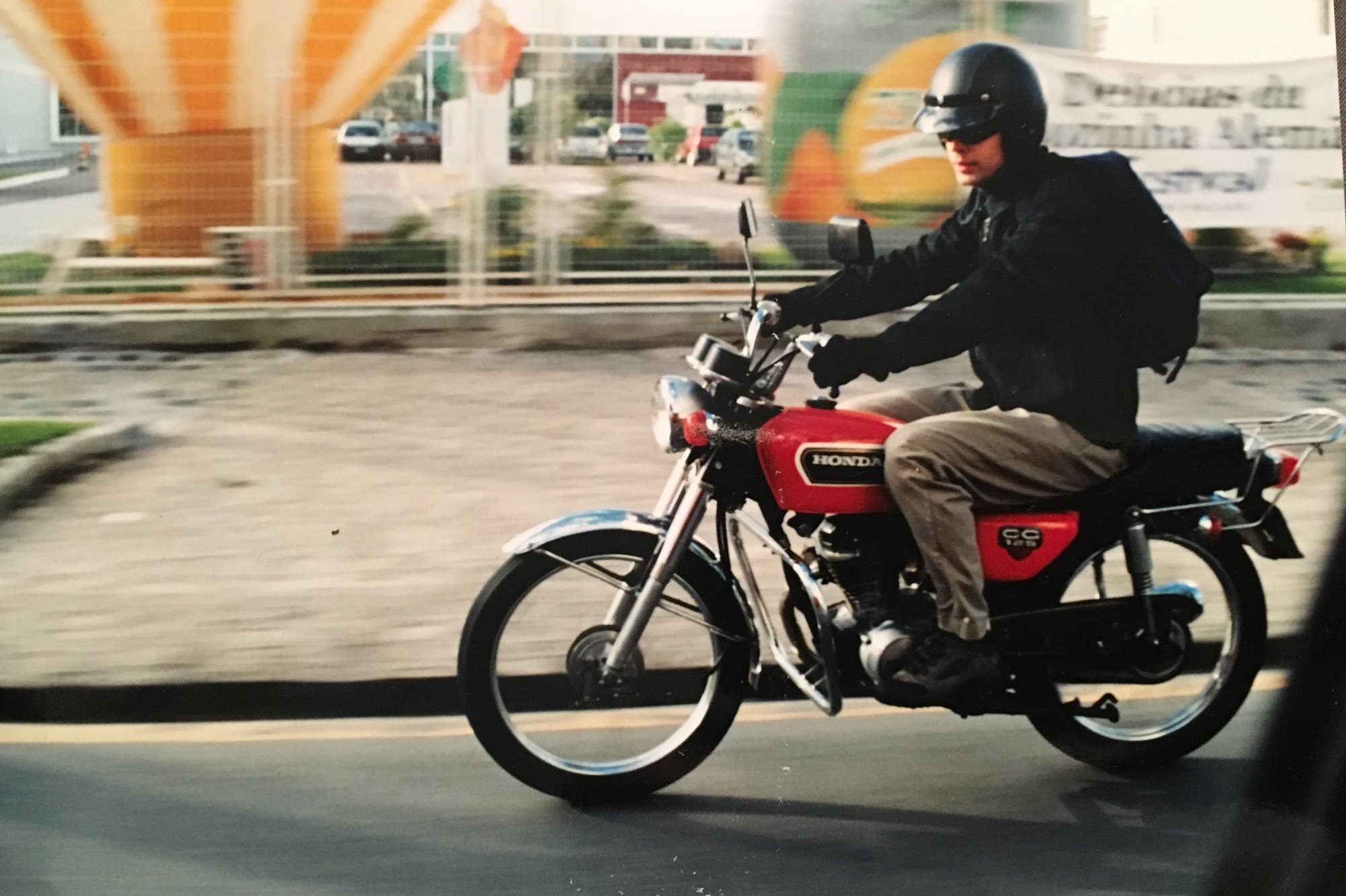
In search of documents — the 1977 CG 125 that accompanied the field research through the colonies and archives of Paraná.
When my eyes caught the surname, the joy was immense. Like a goal scored. I felt like Indiana Jones, or the discoverer of Machu Picchu, all proportions kept.
It seems you can sense in advance when you're getting close to a discovery. You start recognising the surnames, sensing you're on the right track, until you finally find the information you'd been searching for.
Or sometimes you discover it by chance, while looking for someone else, when by coincidence you find that piece of the puzzle you had long been searching for — that is, when the book doesn't simply fall open on the right page. These are some of the mysterious things that happen when researching the deceased.
Except there's barely time to celebrate. Because for every gap filled, new ones emerge exponentially: who were the parents? Where did they come from?
These discoveries came in cycles. There were periods of stagnation and doldrums, sometimes lasting many years, when the sources and records seemed exhausted forever. Until, from one moment to the next, useful information, a new technology, a clue would surface.
Time passed, and other sources for genealogy began to emerge.
In the mid-2010s, several websites appeared online offering digitised records. It was another sea of discoveries. I developed several other family branches.
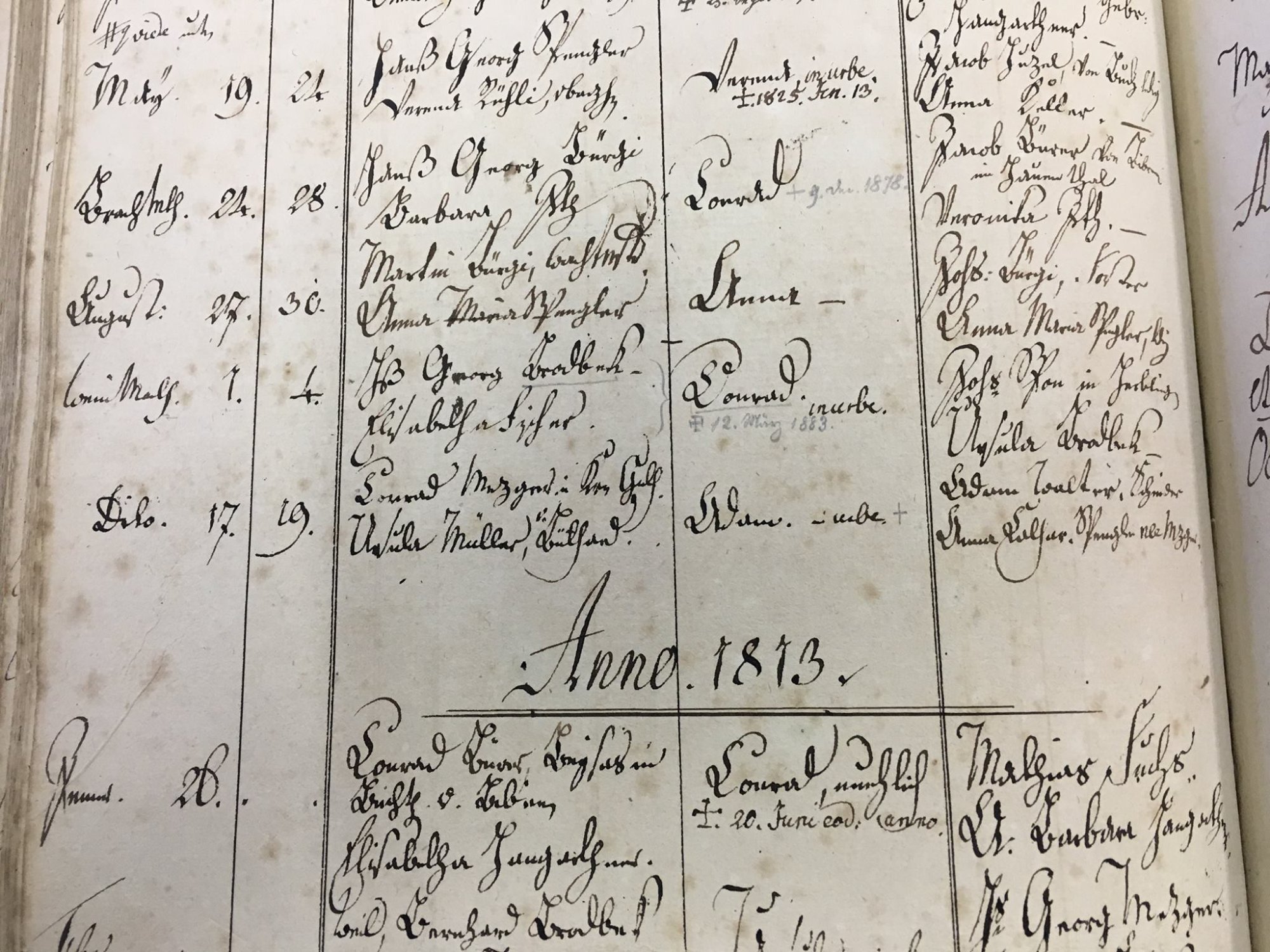
But there came a point, especially with German records, when I would think once again: that's it, this is the end of this family branch, because the records are so badly written, true scrawls. The priest was probably very old, drunk, or both.
But, to my surprise, once, when I visited the Schaffhausen Historical Archive, the clerk read the record to me letter by letter. I was astonished. How was that possible? She explained that it was Kurrentschrift, an old German cursive script. She gave me an alphabet and advised that practising the writing was the best way to decipher it.
In 2011 my little princess was born and my workload doubled, since from then on I naturally had to include my wife's genealogy as well.
The research remains ongoing.